MiniMakers delivers a monthly subscription box to kids’ doorsteps, and they needed a children’s video production studio to build the series that would bring each kit to life – animated episodes that made the science inside every box feel like an adventure. The team came to us with a clear need: every box needed a companion episode, a short animated series that would bring the science behind each kit to life and give kids characters to follow along with.
The scope was ambitious. We weren’t producing one-off videos – we were building a production system that could sustain a monthly release schedule while keeping every episode consistent in quality, tone, and educational value. That meant developing characters, writing a repeatable script format, building original illustrated worlds, and creating a green screen VFX pipeline that could support all of it.
The result was a pilot series featuring three episodes, each one a standalone science adventure that also introduced kids to the real STEM concepts packed inside their box.
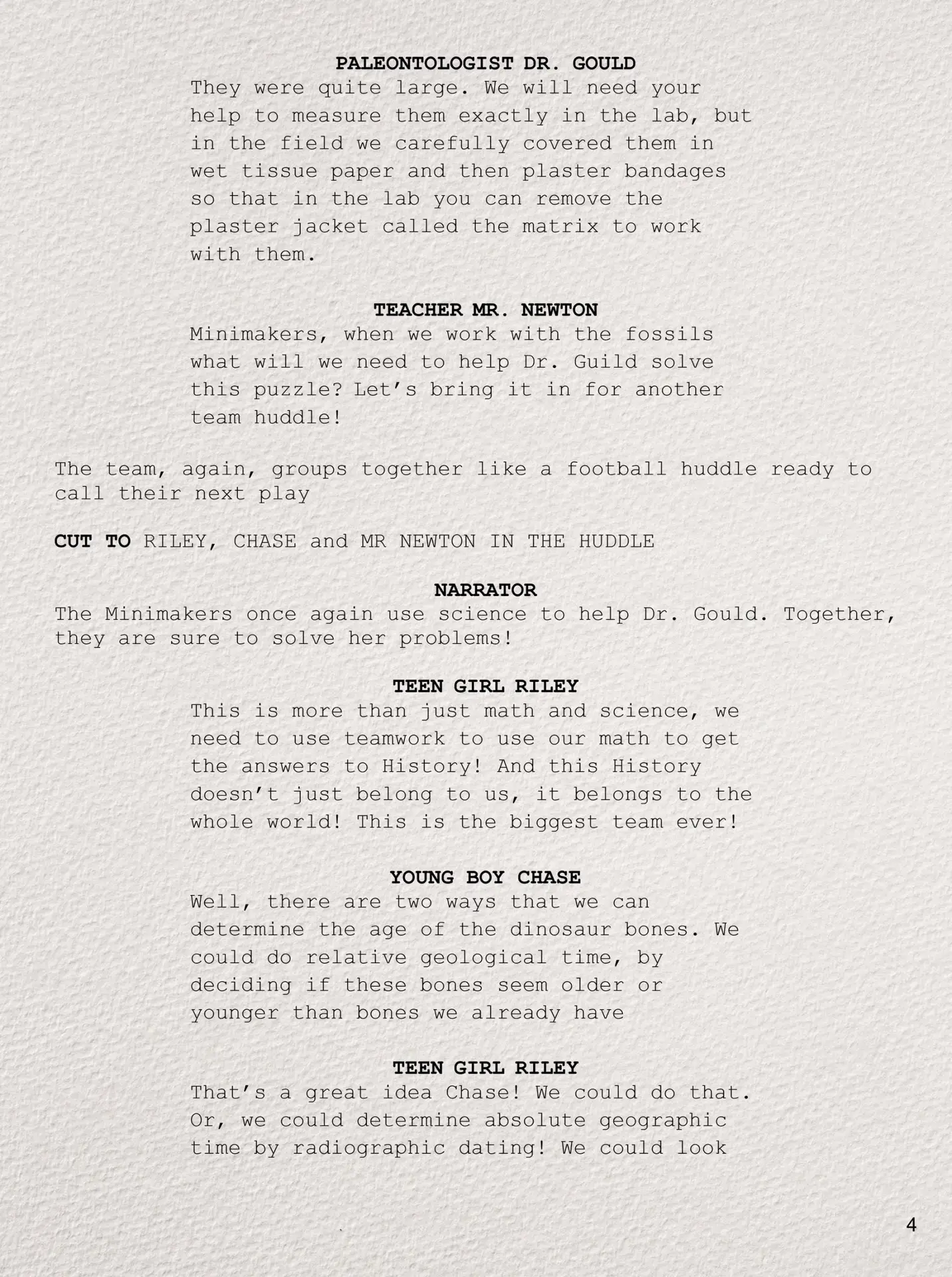
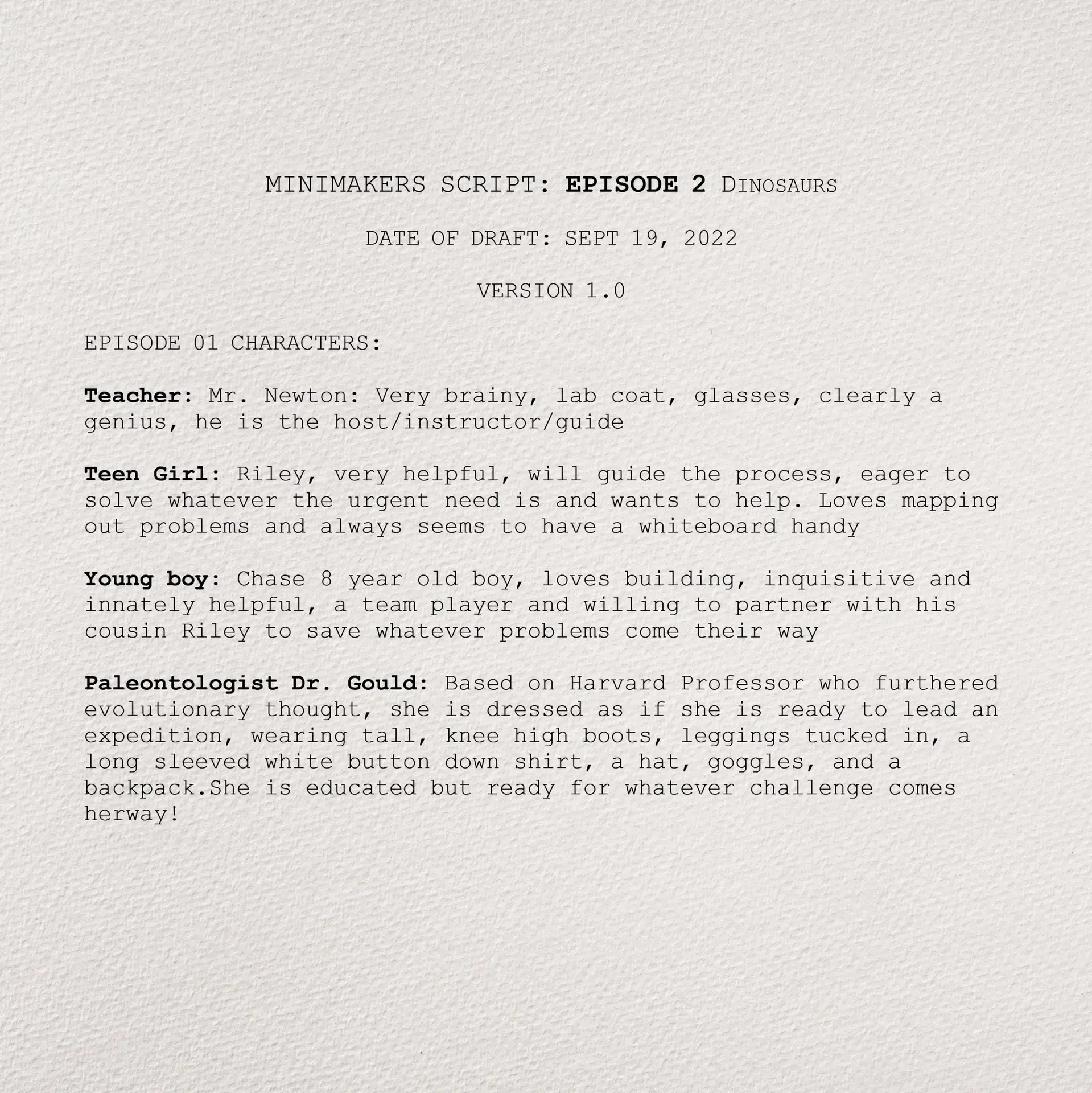
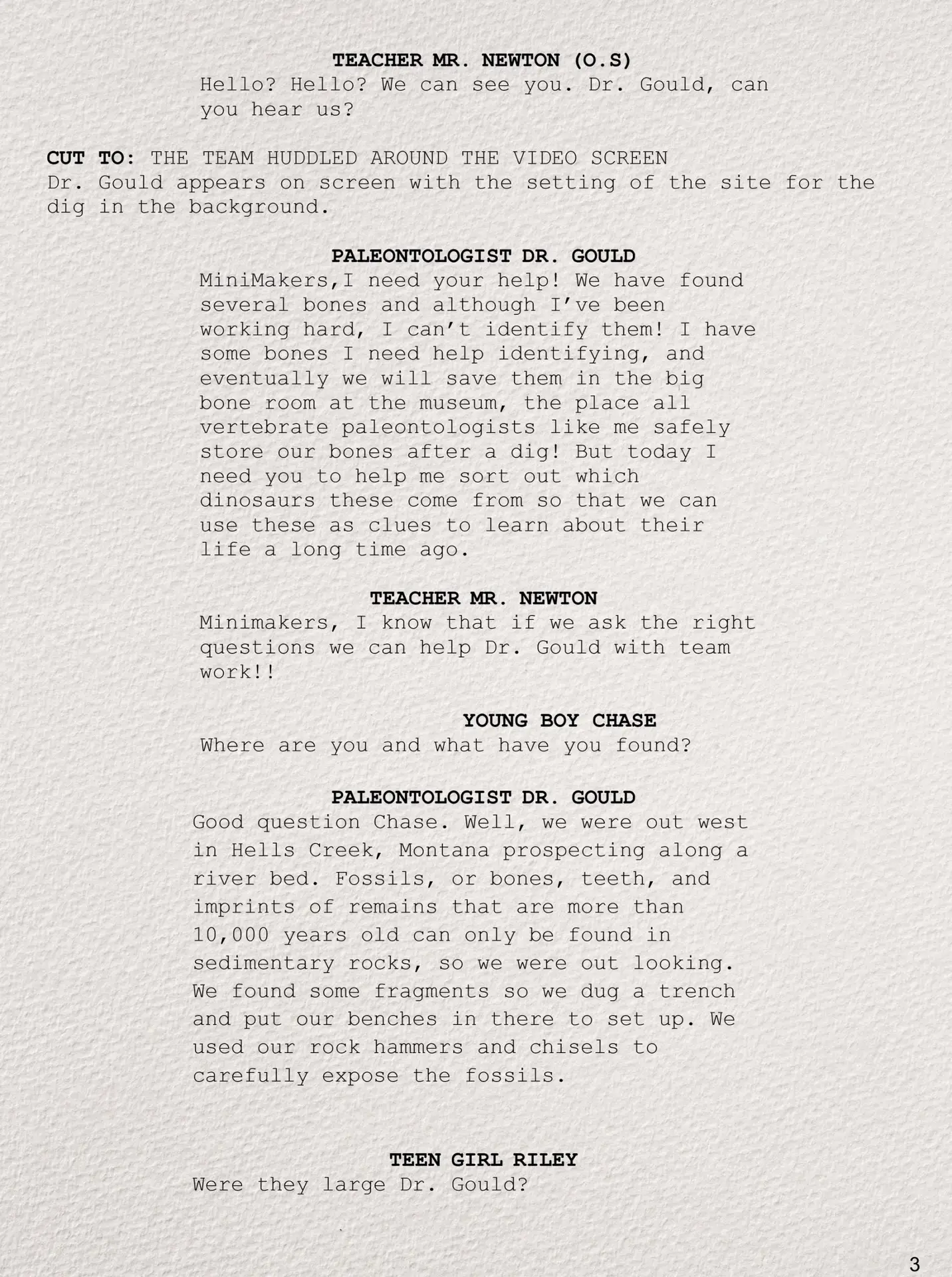
The Scripts
Before a single frame was shot, we needed scripts that could carry both entertainment and education without letting either one drag down the other. We worked closely with the scientists at MiniMakers to understand the core concepts each episode needed to cover – what the experiment was, what principle it demonstrated, and what a kid would actually take away from it.
From those expert notes, we built scripts for three characters: Mr. Newton, the lead, and his team Chase and Riley. Each episode follows the same four-act structure: in Act One the problem is introduced, Act Two follows the team as they build the kit, and Acts Three and Four put the science to the test and explain what just happened. That repeating structure wasn’t just a format – it was deliberate. Consistent structure means kids know what to expect episode to episode, which keeps younger audiences engaged and helps parents know what kind of show they’ve brought into the house.
Scripts were written by Laura Schreiber and refined through collaborative review cycles between our team and the MiniMakers scientists to make sure every explanation was both accurate and accessible to the target age group.
Children's Video Production: Visual Effects
With the scripts locked, we built a green screen production workflow that would let us place our three live-action characters into fully illustrated environments. Green screen was the right call for a monthly subscription format: it’s faster to shoot and infinitely flexible in post, which means our turnaround time stays predictable even when the illustrated worlds change episode to episode.
All compositing and animation was handled in Adobe After Effects. The characters were shot against a green screen stage, keyed, and then integrated into the illustrated environments with matching light, shadow, and motion blur so the live footage and the illustration read as one world. Props and in-world effects – sparks, gears, dust clouds – were layered in as motion graphics elements that matched the flat vector style of the illustrations.
For a kids’ series, that visual cohesion matters. If the live-action layer and the illustrated layer feel like they exist in different realities, it breaks the immersion that makes the characters believable to a young audience.
World-Building Through Illustration
Every great animated series begins with a world worth exploring. For MiniMakers, we developed a suite of richly detailed 2D illustrated environments that gave the series its visual identity – each one designed to spark curiosity and drop young viewers into a completely different setting.
From the rust-red terrain of Mars to the fossil-layered depths of Hells Creek, the winding slides of Mr. Trivoli’s Waterpark to the gear-and-blueprint world of the MiniMakers Lab, every environment was built as a fully realized place – not just a backdrop. The flat vector illustration style was chosen deliberately: bold enough to read on screen for young audiences, detailed enough to reward a second look.
The gear motif recurring across each world ties the episodes together thematically, reinforcing the series’ core idea that builders and makers exist everywhere – on other planets, underground, at the waterpark, in the lab next door.
This kind of environment design is foundational to 2D animation production. When the world feels real, the characters that inhabit it feel real too.