What This Podcast Keeps Teaching Me
August 5, 2026
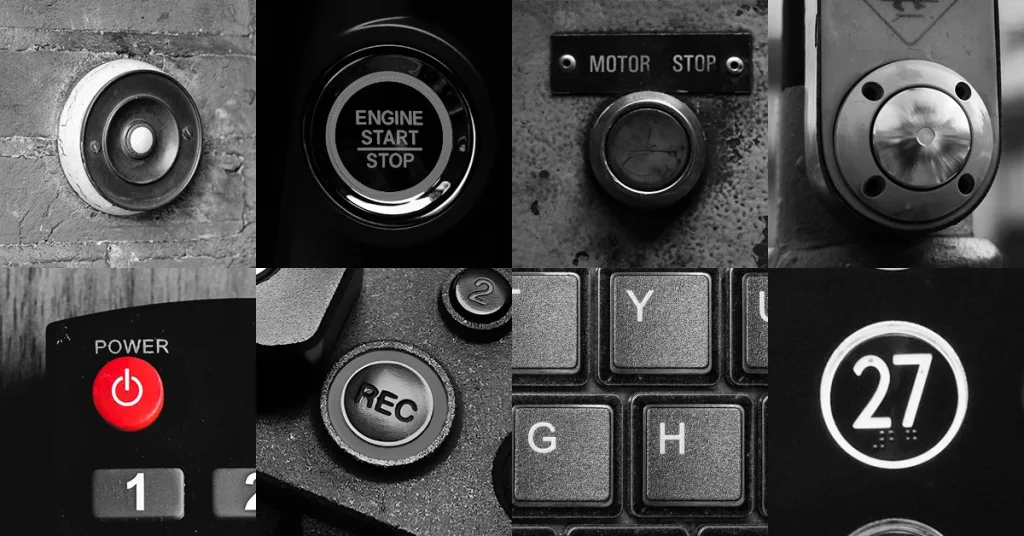
There Is Still No Magic Button
You have seen the AI flyer. Or the AI poster. I see it everywhere, from university posts to housewarming parties, from community announcements to concerts. Everything is starting to look very similar: glossy colours, too-smooth faces, the same polish. Nobody has to tell you a machine made it. You know in half a second, and you trust it a little less.
That flyer is the state of AI in creative work right now. The tools are everywhere. Just because you can does not mean you should. Organizations that used to hire a designer or a marketer now open an AI tool and do it themselves. It is faster. It is cheaper. And it shows.
Almost four years in…
ChatGPT launched in November 2022. Since then AI has moved into nearly every creative workflow, including ours. Jobs have disappeared. New ones have appeared. The internet has filled up with content nobody asked for.
There is a name for it now: AI slop. It is the flyer, multiplied by a billion.
Four years have produced plenty of tools and no magic button. No prompt turns a vague idea into a finished brand film. Anyone selling you that is selling you slop with a nicer invoice.
So here is what AI does inside Potential Pictures, and where it stops.
Where it earns its place
Packaging a podcast. I produce and host the OverArch Podcast. Once an episode is edited and locked on the timeline, the transcript goes into Claude, where I built a custom skill that drafts the release package: clip picks for social, plus descriptions for Spotify, Apple Podcasts, YouTube, TikTok and LinkedIn. That work used to take me about six hours an episode. Now it takes about one. That is 83% of the time back.
Look at what stayed human. I booked the guest, ran the interview and made the edit. The AI works from a conversation two people actually had, and I review every word before it goes out. It takes the repetitive part and leaves me the part that needs me.
Pitching a concept. Clients used to approve ideas from a paragraph and a mood board of other people’s work. Now I generate storyboard frames that show the concept I am pitching. The client sees the idea before anyone spends a dollar building it. Every board carries a note: these frames are AI-generated, and the final deliverable may differ in look and detail. The boards pitch a concept. They are a starting point for the design, and the real thing gets built with cameras, people and editing software once the concept is approved.
Both uses have the same shape. AI speeds up the thinking and the paperwork around the work. People still make the work.
Where the line is drawn
People come first. Today, every person on screen is real.
AI-generated footage has a place in visual effects. When we use it, we say so.
Voice works the same way. If a project calls for an AI voiceover, the voice is trained on a real person who gave permission. No scraped voices. No stolen likenesses.
That line is practical as much as principled. A brand film works because the people in it are real. A documentary works because it happened. A synthetic founder telling a synthetic story is worth nothing to the company paying for it.
California wrote a rule. Canada has not.
On September 16, 2026, California’s governor signed SB 1050. It requires an explicit disclosure on any video or audio advertisement that uses AI-generated performers to sell a product or service. An ad found in violation cannot keep running. New York got there first: its synthetic performer law took effect on June 9, 2026.
These are narrow laws. They cover synthetic people and voices. They leave alone AI-assisted colour work or a first-draft script. But the direction is clear. Audiences want to know when the person on screen does not exist.
Canada has no law that requires a label on a synthetic performer. Quebec now requires consent before a business uses a person’s image or voice in advertising. Federal rules against misleading advertising apply to AI like anything else. Neither tells an audience when the person on screen was generated. Until that rule arrives, the standard is whatever each company decides it is. Ours is simple. Today, every person on screen is real. If AI touched the process, we tell you where.
Slop is a quality problem
The research points the same way. A 2026 DoubleVerify study found that 42% of consumers across Europe, the Middle East and Africa feel negatively about brands that make low-quality AI ads. In the UK that number is 49%. For professional-quality AI advertising, it drops to 29%.
People can live with the technology. They punish work that looks like nobody cared. That is the flyer again.
Three questions to ask a production partner
- Where do you use AI in your process?
- Will anything in my final video be AI-generated?
- Will you tell me if that changes?
A good production partner answers all three without hesitating.
AI made us faster at the parts of the job that never needed a human touch. That bought more time for story, people and craft. Those were never going to be automated.
There is still no magic button.